Restaurants contribute a fair share to the global food waste. Negligent practices and inefficient operations worsen the situation and lead to more food waste. Restaurant authorities not only need to identify the sources of the issue but also manage them efficiently to reduce it to zero.
Managing food waste in restaurants requires operational efficiency in multiple areas, which is dependent on professional expertise. If you lack in the area, feel free to contact expert restaurant consultants in Dubai and plan food waste management for your setup.
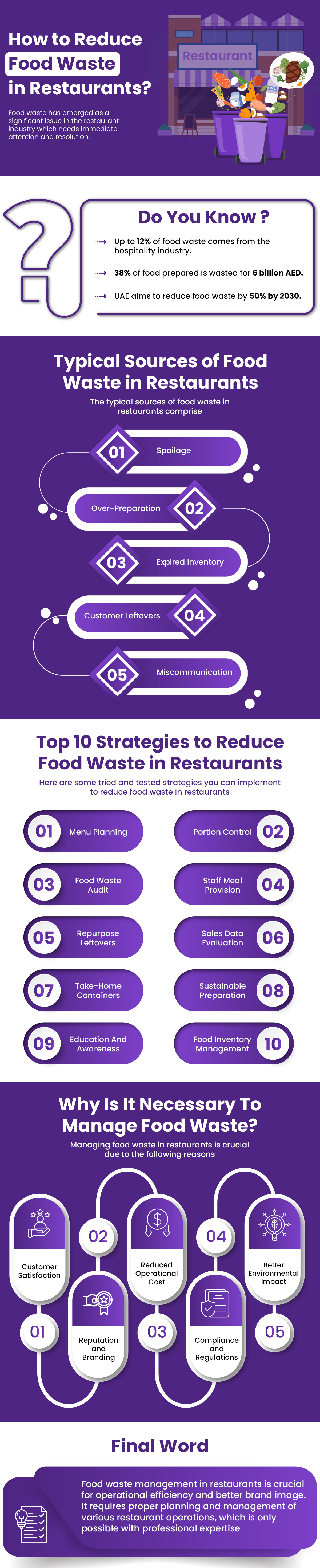
Food waste has emerged as a significant issue in the restaurant industry which needs immediate attention and resolution.
Do You Know?
- Up to 12% of food waste comes from the hospitality industry.
- 38% of food prepared is wasted for 6 billion AED.
- UAE aims to reduce food waste by 50% by 2030.
Typical Sources of Food Waste in Restaurants
The typical sources of food waste in restaurants comprise:
- Over-Preparation
- Customer Leftovers
- Spoilage
- Expired Inventory
- Miscommunication
Top 10 Strategies to Reduce Food Waste in Restaurants
Here are some tried and tested strategies you can implement to reduce food waste in restaurants:
- Menu Planning
- Portion Control
- Food Inventory Management
- Sales Data Evaluation
- Staff Meal Provision
- Repurpose Leftovers
- Take-Home Containers
- Sustainable Preparation
- Education And Awareness
- Food Waste Audit
Why Is It Necessary To Manage Food Waste?
Managing food waste in restaurants is crucial due to the following reasons:
- Reduced Operational Cost
- Better Environmental Impact
- Compliance and Regulations
- Reputation and Branding
- Customer Satisfaction
Final Word!
Food waste management in restaurants is crucial for operational efficiency and better brand image. It requires proper planning and management of various restaurant operations, which is only possible with professional expertise.

 Restaurant Consultancy
Leave a comment